Stand taller. Breathe better. Evolve.
One slow turn. Your posture score, what’s holding it down, and the exercises to work on it — free.
Prop your phone up and turn slowly through 360°, in fitted clothing — it talks you through it. Reading dozens of frames instead of one makes the score far tighter than a single photo can be. Then you see your score out of 100 with its honest range, exactly what’s costing you points and how much, and the plan built from it — the strength exercises for your weakest areas, ranked, each with its dose and how-to. Nothing blurred, no card, no email. About two minutes start to finish.
Free — full score, no card, no email · a 360° video scan · ~2 minutes · fitted clothing · 18+ · a screening read, not a medical exam
Example — real format, sample numbers
- #1Forward head−12 pts
- #2Rounded upper back−10 pts
- How ▾Close ▴Deep-neck nodsEvery day20-sec stretch, then 10 holds of 10 sec · Deep front-neck muscles
Lie on your back, knees bent, head on a thin folded towel.
- 1Stretch (20 sec): fingertips under the base of your skull, gently draw your head along the towel, away from your shoulders.
- 2Hands off. A tiny “yes” nod, as if pointing your chin at your throat. Hold 10 sec.
- 3Very light effort — the cords at the front of your neck stay soft.
Avoid: Crunching your chin down hard or lifting your head off the towel.
Too hard? A thicker pillow, a smaller nod, 5-sec holds.
Too easy? Add 1–2 standing sets a day, back to a wall: nod and grow tall. If your head doesn’t reach the wall, don’t force it back — nod where it is.
- How ▾Close ▴Face-down head lifts3 holds of 15–20 sec · Back-of-neck muscles
Lie face down, chest on the floor, forehead on a folded towel.
- 1Small nod first, then float your head about an inch.
- 2Eyes stay on the floor — don’t look up.
- 3Chest stays down — lift from the base of your neck, keeping the nod.
Avoid: Looking up or poking your chin forward.
Too hard? 10-sec holds, resting your forehead between each.
Too easy? Build to 30–45 sec, then drape a light ankle weight over the back of your head.
+ 5 more
Here’s exactly what your free scan shows you.
Your pattern: Forward head
- #1Forward head−12 pts
- #2Rounded upper back−10 pts
- #3Shoulders forward−7 pts
- #4Overall alignment−5 pts
- #5Left–right balance−2 pts
Also: your lower back looks arched — a rough read from the scan, not part of the score. The plan includes hip strength work for it.
Train your deep front-neck muscles and back-of-neck muscles with these:
- How ▾Close ▴Deep-neck nodsEvery day20-sec stretch, then 10 holds of 10 sec · Deep front-neck muscles
Lie on your back, knees bent, head on a thin folded towel.
- 1Stretch (20 sec): fingertips under the base of your skull, gently draw your head along the towel, away from your shoulders.
- 2Hands off. A tiny “yes” nod, as if pointing your chin at your throat. Hold 10 sec.
- 3Very light effort — the cords at the front of your neck stay soft.
Avoid: Crunching your chin down hard or lifting your head off the towel.
Too hard? A thicker pillow, a smaller nod, 5-sec holds.
Too easy? Add 1–2 standing sets a day, back to a wall: nod and grow tall. If your head doesn’t reach the wall, don’t force it back — nod where it is.
- How ▾Close ▴Face-down head lifts3 holds of 15–20 sec · Back-of-neck muscles
Lie face down, chest on the floor, forehead on a folded towel.
- 1Small nod first, then float your head about an inch.
- 2Eyes stay on the floor — don’t look up.
- 3Chest stays down — lift from the base of your neck, keeping the nod.
Avoid: Looking up or poking your chin forward.
Too hard? 10-sec holds, resting your forehead between each.
Too easy? Build to 30–45 sec, then drape a light ankle weight over the back of your head.
Train your back muscles along your spine and middle and lower traps with these:
- How ▾Close ▴Chest-supported mid-back lifts3 sets of 8, hold 3 sec · Back muscles along your spine
Lie face down, a folded towel or firm pillow under your lower breastbone, forehead on a second towel.
- 1Lift from between your shoulder blades — an inch is plenty.
- 2Everything below the towel stays heavy. Glutes lightly on.
- 3Neck long, eyes down. Hold 3 sec, lower slowly.
Avoid: Lifting your legs or arching from your lower back — that’s a Superman, skip it.
Too hard? A smaller lift and 2-sec holds.
Too easy? Arms in a W (goalpost), then a low Y with thumbs up. Hold each lift 5 sec. Never arms straight overhead.
- How ▾Close ▴Incline Y-raise3 sets of 8–12, light dumbbells · Lower & middle traps
Lie chest-down on a bench set to about 30–45°.
- 1Arms in a Y, thumbs pointing up.
- 2Reach long through your thumbs, then lift — no shrugging.
- 3Chest stays down. Pause 2 sec at the top.
Avoid: Arching your lower back to get your arms higher.
Too hard? No weight, or bend your elbows into a W.
Too easy? Heavier weights and a slow 3-sec lower.
Demo
Train your serratus (the muscle on the side of your ribs) with these:
- How ▾Close ▴Push-up plus, feet up3 sets of 8–12 · Serratus (side of your ribs)
Push-up position with your feet on a bench.
- 1Do the push-up, then push the floor away a little further at the top.
- 2Your shoulder blades slide around your ribs.
- 3Body in one straight line.
Avoid: Sagging hips or shrugging your shoulders up.
Too hard? Hands on a wall or a kitchen counter.
Too easy? Hold the top for 2 sec on every rep.
Demo · Shows the floor version — same move with your feet up.
Train your glutes and abs with these:
- How ▾Close ▴Barbell hip thrust3 sets of 8–12 · Glutes
Upper back on a bench, a padded barbell across your hips.
- 1Drive through your heels and squeeze your glutes to lift.
- 2Ribs down, chin slightly tucked.
- 3Finish in a straight line — don’t arch past it.
Avoid: Arching your lower back at the top instead of using your glutes.
Too hard? A glute bridge on the floor.
Too easy? Single-leg, or a 2-sec squeeze at the top.
Demo · Shows the floor bridge — same finish; the hip thrust adds a bench behind your back.
- How ▾Close ▴Dead bug with light dumbbells3 sets of 6–8 per side · Abs & obliques
On your back, a light dumbbell in each hand, knees bent 90° over your hips.
- 1Let your ribs settle down toward your hips — no crunching.
- 2Slowly reach one arm back and the opposite leg out.
- 3Keep your lower back still the whole time.
Avoid: Letting your lower back arch up as the leg goes out.
Too hard? Move only your legs, and shorten the reach.
Too easy? Heavier dumbbells, or ankle weights.
Demo
Tap How on any exercise for the setup, cues and an easier version. Every exercise has a home version too.
Example — real format, sample numbers. A posture screening & coaching read, not medical advice.
Free — full score, no card, no email · a 360° video scan · ~2 minutes · fitted clothing · 18+ · a screening read, not a medical exam
Modern life pulls you forward — and no one ever hands you a straight answer on what to do about it.
Phones, desks and driving keep us craned forward — head drifting ahead of the shoulders, lower ribs poking forward, breath gone shallow. It creeps in slowly, and “just sit up straight” never touches the pattern underneath.
You can’t see your own pattern from inside it. A two-minute scan can.
Free — full score, no card, no email · a 360° video scan · ~2 minutes · fitted clothing · 18+ · a screening read, not a medical exam
How it works
Turn slowly in front of your phone
Tap Start scan — no sign-up, no email. Prop your phone at hip height, stand in fitted clothing with your whole body in frame, and turn slowly while it talks you through it. 18+ only.
We measure
The engine finds your landmarks — ear, shoulder, hip, knee, ankle — across dozens of frames and reads how you stack, the same way every time. No hand-marked dots. Nothing you film is kept once the score is produced.
Read it, then tighten it
Your score with its honest range, your pattern, your weak points ranked and the exercises for them — on-screen right after your scan. Re-scan in 30 days: we only call it progress when the change is bigger than the small natural wobble every measurement has.
Free — full score, no card, no email · a 360° video scan · ~2 minutes · fitted clothing · 18+ · a screening read, not a medical exam
Built to earn a skeptic’s trust
No before-and-after strangers. No star ratings. We opened the scanner in 2026 and you’re early — so beyond a handful of early testers in their own words, here’s exactly how the read works and where its limits are.
Every score shows its range — and here’s where that range came from.
I scanned one body — mine — over and over, in different clothes, light and backgrounds, and measured how far the number moved on its own. That spread is the precision range printed on every score, instead of hiding in fine print. It’s one person, six scans a side, so treat it as a close estimate, not a settled number. Settling it would take a set across many bodies, and we haven’t run one. And where a photo genuinely can’t say (some angles simply can’t be measured from a single photo), your scan tells you so — a wider range or an honest “can’t see this” — instead of a guess. We’d rather abstain than bluff.
No hands on your measurement — consistent every time
No coach hand-marking your photos, so your score doesn’t drift from one session to the next. Re-scan and trust the trend.
Progress that clears the noise
Every score shows its own precision range — how much the number can naturally vary between scans of the same body — and we only call it progress when your change clears it — no lighting tricks, no wishful rounding.
Strength first, biggest problem first
Your plan trains the muscles behind the areas costing you the most points, ranked — gym and home versions for every exercise.
Strength, not stretching
Every exercise trains a muscle that holds you up. The only stretch in the plan is 20 seconds before the neck work.
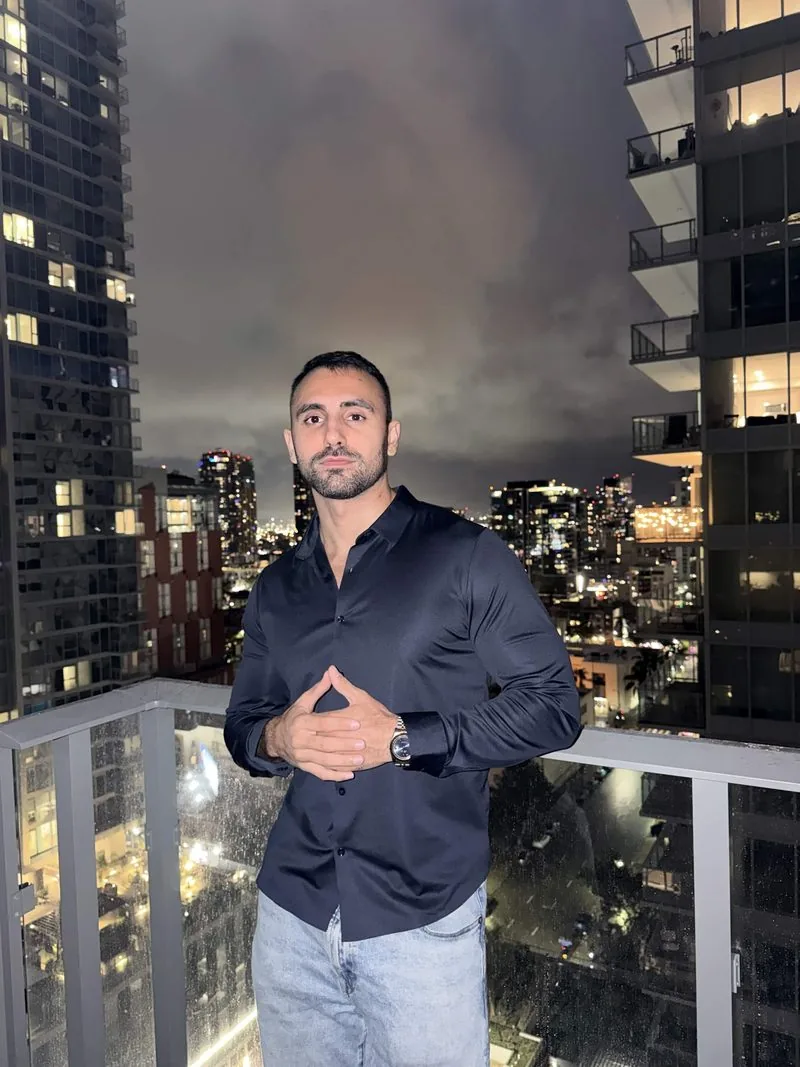
A decade obsessed with one question: how high can posture go?
I’m Andre. I’ve spent over a decade exploring posture, mobility and breathing mechanics — testing yoga, weight training, the Postural Restoration Institute, physical therapy, DNS and bioenergetics on my own body — to rebuild posture at the root and chase what almost no one has: elite alignment. Posture Rebuild is how I help you do the same.
See what a decade of testing reads in one photo. Get my free posture score →
Free — full score, no card, no email · a 360° video scan · ~2 minutes · fitted clothing · 18+ · a screening read, not a medical exam
What early testers say
“Thoroughly impressed with the precision.”
“For a musculoskeletal app analyzing someone's posture, this is incredibly impressive to say the least.”
“Training with Andre's method is the first thing that actually made it click — three and a half months in, I feel like a different person. The training and breathing advice is next level.”
Real early-tester quotes, shared with permission — shortened in places, never reworded. Individual experiences vary.
What it costs
Nothing. The scanner is free while it earns its first thousand scans. The only thing I ask for is one tap of feedback after your score — was it about right?
Free Scan
See where you stand.
- ✦A two-minute 360° scan — no sign-up, no email
- ✦Your score with its honest precision range
- ✦Your pattern, and your weak points ranked
- ✦Your plan — the strength exercises for your weakest areas, ranked
- ✦Re-scan whenever you like
- ✦The free community — post your scan, ask what to do next
No card · no account · no email · a 360° video scan in fitted clothing · 18+ · a screening read, not a medical exam
Fitted clothing, 18+. Your photo is used only to produce your score and is deleted the moment the score exists — never stored, never posted, never used for anything else. How photos are handled →
What to expect
Honest about the journey — no overnight promises.
The first weeks
You learn the handful of exercises on your plan and the form for each. It feels like effort at first — that's normal.
Over a couple months
Three sessions a week, adding weight as it gets easy, and your weak areas get stronger. You re-scan and watch the trend — real change bigger than the small natural wobble every measurement has, not a lighting trick.
Keeping it
Posture is earned and maintained like fitness. Stay consistent and it holds; stop and it drifts back. That's the honest truth of how bodies work.
Honest timelines are the deal we offer instead of hype — and that’s exactly why the scan is free. The scan itself is the easy part: one photo, sixty seconds. Start there.
Free — full score, no card, no email · a 360° video scan · ~2 minutes · fitted clothing · 18+ · a screening read, not a medical exam
Questions, answered
Who sees my photo?
Nobody — not even Andre. The free scan deletes your photo the moment your score is produced; it is never saved, never posted, never used to train anything. Only the derived numbers stay, and they can't be turned back into a picture of you. The full detail is on the How photos are handled page.
Is this medical?
No. It's a posture screening and coaching tool, not a medical device or medical advice. It doesn't diagnose or treat anything; for pain, injury, or medical concerns, see a licensed healthcare provider.
Why fitted clothing instead of shirtless?
Fitted clothing is what the free scan is calibrated on — a compression shirt or fitted tee with leggings or shorts works great, and the scan never asks for bare skin. Fitted always works on every tier.
How accurate is it?
Honest about it, which matters more. Every score comes with its own precision range — how much the number can move between repeat scans of the same body. That range came from repeat scans of one body: Andre's, six per side, in different clothes, light and backgrounds. One person, so treat the range as a close estimate; settling it would take a set across many bodies, and we haven't run one. It's a screening and tracking read, not a clinical measurement — built to rank your weak links and track your change over time, which is what actually matters for rebuilding.
Do I need equipment or experience?
No experience needed. Your plan is a handful of strength exercises — about 15–30 minutes, 3 days a week, plus a few minutes of neck work daily if your neck is on the list. Every exercise has a gym version and a home version (a band or a backpack at most).
What's the catch?
There isn't one. The scanner is free while it earns its first thousand scans. No account, no email, no card. The one thing I ask is a single tap after your score — was it about right? — because that feedback is how the engine gets better.
Your pattern is already in the photos. Find out what it is — free.
One slow turn, fitted clothing. Your score, your pattern, and what’s costing you the most points — about two minutes, start to finish.
Free · no account, no email · 18+ · your photo is deleted the moment your score exists — never stored, never posted · screening, not medical